


What happens to a wine before it even gets bottled?
- Norman Günzer

- 4 hours ago
- 3 min read
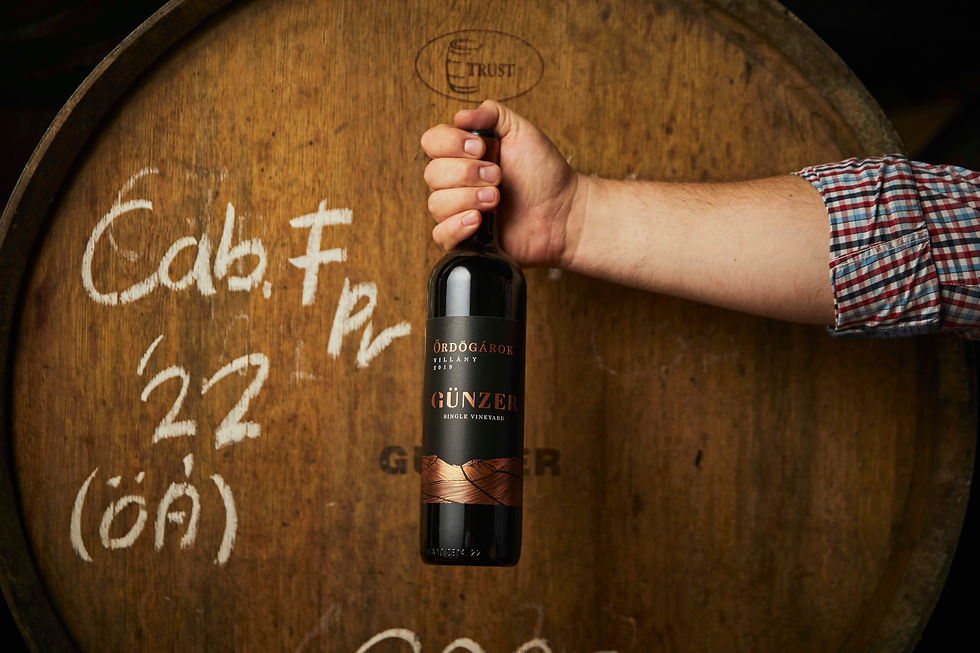
When someone opens a bottle of wine, they are faced with the finished result. They see the label, fill it with wine, and then decide whether they like it. By then, wine has come a long way, and we have had to make many decisions, big and small, along the way.
It all starts with the harvest. The grapes are hand-picked into smaller crates that are intentionally not filled to the brim. If an over-packed crate is placed on top of another, the weight of the next crate can crush the berries. The juice will run out, and by the time the grapes arrive at our table, they will no longer be healthy berries, but a soupy, squashed mess. We, on the other hand, want to select whole berries because pure wine requires good ingredients from the very first step.
In the case of white and rosé wines, the grapes are pressed within a short time, and then the pressed must is processed further. In the case of red wines, we also need the skins, so the grapes are put into the fermentation tank with the skins. This is where the color of the wine comes from, as well as many of the flavor and structure elements that later determine its character.
After fermentation, we have to decide in which direction we want to take the wine. For example, our Lezser Vörös is not aged in wooden barrels at all. This makes it fresher, fruitier and easier to understand. You don't have to analyze it for a long time, it's just nice to drink. In fact, I think it's perfectly fine even as a spritzer. I know that making a spritzer out of red wine is a dangerous statement in some circles, but perhaps that's exactly the point of Lezser: you don't have to make a solemn face with every glass of wine.
For our more serious red wines, fermentation is followed by barrel aging . After a year in barrel, the fruitiness is still prominent, but the spicy notes from the barrel and the more complex structure appear. After two years, the effect of the barrel is stronger, but it is important for us that the fruit does not disappear at this time. The goal is not to just feel the barrel, but to get a complex, mature and elegant wine.
The timing of bottling is one of the most important decisions. We keep our fresher wines in closed containers, protecting them from oxygen as much as possible, and then screw them on. This way, they can retain their fresh, fruity character in the bottle.
The world of corked wines is more complex than that. When we bottle a wine, we are essentially entrusting its future life to the cork. It's a bit like a father entrusting his daughter's life to her new partner. He has raised her, watched her, and tried to steer her in the right direction, but at some point he has to let her go. From then on, he just hopes he made the right choice.
However, bottling does not mean that the wine is ready for the market. After one year of barrel aging, we usually wait another year, while our wines that have been aged in barrel for two years often spend another two years in bottle. The barrel gives the wine new flavors, tannins and structure, and in the bottle these need to come together nicely. The tannins round out, the flavors smooth out, and the wine becomes silkier.
The cork also plays an important role in this. With a more open cork structure, the wine can develop faster and be released to the market sooner, but it is also expected to retain its best form for a shorter period of time. A denser, more closed cork allows for slower maturation: you have to wait longer for the wine, but it can also have a longer life.
In general, I tend to say that our wines aged in barrels for one year can develop nicely for about 8–10 years from harvest, with proper storage, and our larger wines aged for two years can develop nicely for up to 15–20 years.
And I've been thinking about a new idea lately. What if we treated the first hundred bottles of our great wines differently when bottling them? They would get the densest, most sealed cork possible, and then we would set them aside for 15–20 years from day one, as a kind of time capsule of their own.
I wonder what it would be like in two decades to uncork a bottle that we knew from the moment it was born was destined for a long life.
Maybe we'll try it this year.
What do you think about it? Should we set aside a hundred bottles for the future? Write it here in the comments :)
Thank you for reading.
Pure flavors, careful hands.
Regards, Gunzer Norman
Comments